
• Skip to main content
  • Skip to secondary menu
  • Skip to primary sidebar
  • Skip to secondary sidebar
  • Skip to footer

  • COVID-19
  • Opinion
  • Health IT
    • Behavioral Health
    • Care Coordination
    • EMR/EHR
    • Interoperability
    • Patient Engagement
    • Population Health Management
    • Revenue Cycle Management
    • Social Determinants of Health
  • Digital Health
    • Artificial Intelligence
    • Blockchain
    • Mobile Health
    • Precision Medicine
    • Telehealth
    • Wearables
  • Startups
  • M&A
  • Value-based Care
    • Accountable Care (ACOs)
    • Medicare Advantage
  • Life Sciences
  • Research

ALZpath Secures Funding for Blood-Based Biomarker Testing for Alzheimer’s Disease Detection

by Fred Pennic 07/21/2023 Leave a Comment

  • LinkedIn
  • Twitter
  • Facebook
  • Email
  • Print

What You Should Know: 

– ALZpath, a developer of blood-based diagnostic biomarker testing for Alzheimer’s disease detection receives funding from the Alzheimer’s Drug Discovery Foundation (ADDF)’s Diagnostics Accelerator to accelerate the clinical availability  of ALZpathDx as a laboratory developed test (LDT). 

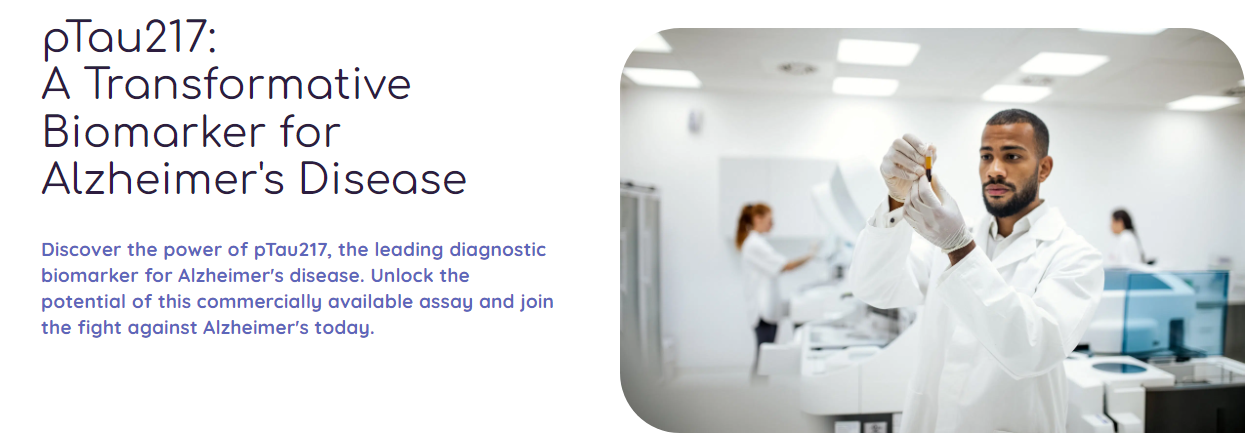
– ALZpathDx is a novel, proprietary assay for blood-based measurement of phosphorylated tau at threonine 217 (pTau217), a highly accurate, diagnostic biomarker for Alzheimer’s disease. The assay is performed on the Quanterix Simoa HD-X immunoassay analyzer.

Accelerate Analytical and Clinical Validation of ALZpathDx

ALZpathDx has been launched for clinical use as laboratory-developed test (LDT). Evaluation in independent clinical cohorts with multiple co-morbidities is currently being established to advance to an in-vitro diagnostic (IVD). The investment comes at a pivotal time in the advancement of Alzheimer’s disease treatments, with Biogen and Eisai’s Lecanemab (LEQEMBI®) recently receiving traditional FDA approval, ushering in a new era for the next generation of Alzheimer’s treatments. A critical barrier to widespread availability and use of these and other treatments to follow is the difficulty in diagnosing Alzheimer’s patients, particularly in the early stages of disease onset, when such treatments may have the most profound impact.

Biomarkers Enable the Next Phase of Clinical Care

Cognitive testing has traditionally been the primary method to diagnose Alzheimer’s disease, however, relying solely on cognition has limitations because patients only show symptoms after significant changes have occurred in the brain. Historically, the only definitive way to confirm an Alzheimer’s disease diagnosis was through autopsy.

As a more accessible and simple approach to understanding brain health, many are turning to biomarkers in peripheral fluids. In the last decade, cerebrospinal fluid (CSF) biomarker assessments have become an important diagnostic tool alongside bioimaging. However, obtaining CSF has its own challenges. Today blood-based biomarkers is considered the future of diagnosing Alzheimer’s disease. pTau217 outperforms other Alzheimer’s diagnostic biomarkers, including CSF and PET scans, to predict the likelihood of Alzheimer’s disease prior to the onset of symptoms.

  • LinkedIn
  • Twitter
  • Facebook
  • Email
  • Print

Tagged With: Alzheimer’s disease, Biomarkers, dementia, Digital Biomarkers

Get in-depth healthcare technology analysis and commentary delivered straight to your email weekly

Reader Interactions

Primary Sidebar

Subscribe to HIT Consultant

Latest insightful articles delivered straight to your inbox weekly.

Submit a Tip or Pitch

Knowledge Hub

 How Top Health Plans Use AI to Save Money and Work Smarter How Top Health Plans Use AI to Save Money and Work Smarter

 How to Build Hybrid Care Models Around Remote Patient Monitoring How to Build Hybrid Care Models Around Remote Patient Monitoring

Trending

Olive Secures $400M At A $4B Valuation to Support New Instant Claim Payment Solution

Olive Shutters Business After Sale to Waystar and Humata Health

Clinician Shortage Worsens Primary Care Crisis, Experts Reveal

Clinician Shortage Worsens Primary Care Crisis, Experts Reveal

FDA Grants Clearance for UltraSight's AI Cardiac Ultrasound

Israel Defense Forces to Utilize UltraSight’s PoCUS Devices in Combat

The Future of Biomarker-Based Therapy for Mental Disorder Care

The Future of Biomarker-Based Therapy for Mental Disorder Care

HLTH23: 6 Digital Health Executives Share Key Takeaways

6 Digital Health Executives Share Key Takeaways from HLTH23

HIMSS Appoints New Chief Financial Officer & General Counsel

HIMSS Appoints New Chief Financial Officer & General Counsel

GoodRx Now Offers Access to $35 Insulin to All Americans

GoodRx Now Offers Access to $35 Insulin to All Americans

Ozempic: From Diabetes Management to Potential Weight Loss Miracle

Ozempic: From Diabetes Management to Potential Weight Loss Miracle

Health M&A: Financial Distress Driving Q3 Healthcare Deals

Health M&A: Financial Distress Driving Q3 Healthcare Deals

GE HealthCare Inks $44M Contract with BARDA to Develop AI-Driven Ultrasound Tech

GE HealthCare Inks $44M Contract with BARDA to Develop AI-Driven Ultrasound Tech

Secondary Sidebar

Footer

Company

  • About Us
  • Advertise with Us
  • Reprints and Permissions
  • 2023 Editorial Calendar
  • Submit An Op-Ed
  • Contact
  • Subscribe

Editorial Coverage

  • Opinion
  • Health IT
    • Care Coordination
    • EMR/EHR
    • Interoperability
    • Population Health Management
    • Revenue Cycle Management
  • Digital Health
    • Artificial Intelligence
    • Blockchain Tech
    • Precision Medicine
    • Telehealth
    • Wearables
  • Startups
  • Value-Based Care
    • Accountable Care
    • Medicare Advantage

Connect

Subscribe to HIT Consultant Media

Latest insightful articles delivered straight to your inbox weekly

Copyright © 2023. HIT Consultant Media. All Rights Reserved. Privacy Policy |